Metronome
Tempo, meter, subdivision, patterns, count-in, and practice structure.
EAR TRAINING · HARMONY · PRACTICE · EXPLORATION
Listening, understanding, practice, and exploration for the modern musician.
One listening space. On iPhone and iPad.
Build your ear through the Core Journey, explore harmony in Sound Theory, practice in Listening Lab, follow your growth through Insights, and use essential musician tools in one connected studio.
Begin the story Shop Hear This Places to Listen01 · CORE JOURNEY · AVAILABLE NOW
Fifty carefully sequenced levels develop pitch, interval, chord, and harmonic recognition through sound.
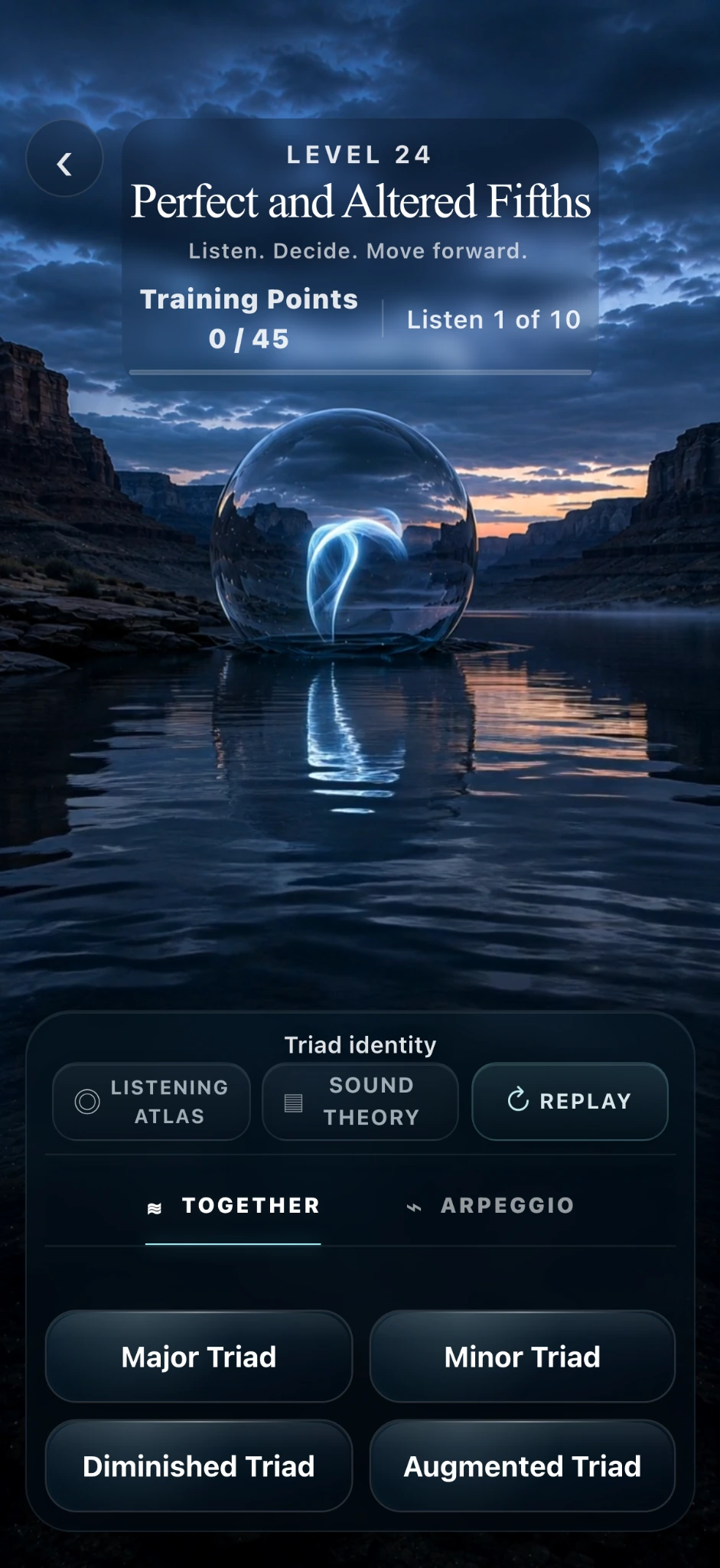
Begin with direct comparisons. Build a dependable interval vocabulary. Continue into triads, seventh chords, extensions, and integrated harmonic listening.
Teaching appears before unfamiliar work. Mastery confirms readiness. Completed material remains available for practice.
Listening Foundations is where Hear This begins. It is not where it ends.
02 · HEAR IT, THEN LOOK CLOSER
The ear stays first. Visual teaching and interactive theory help make sense of the relationship you just heard.
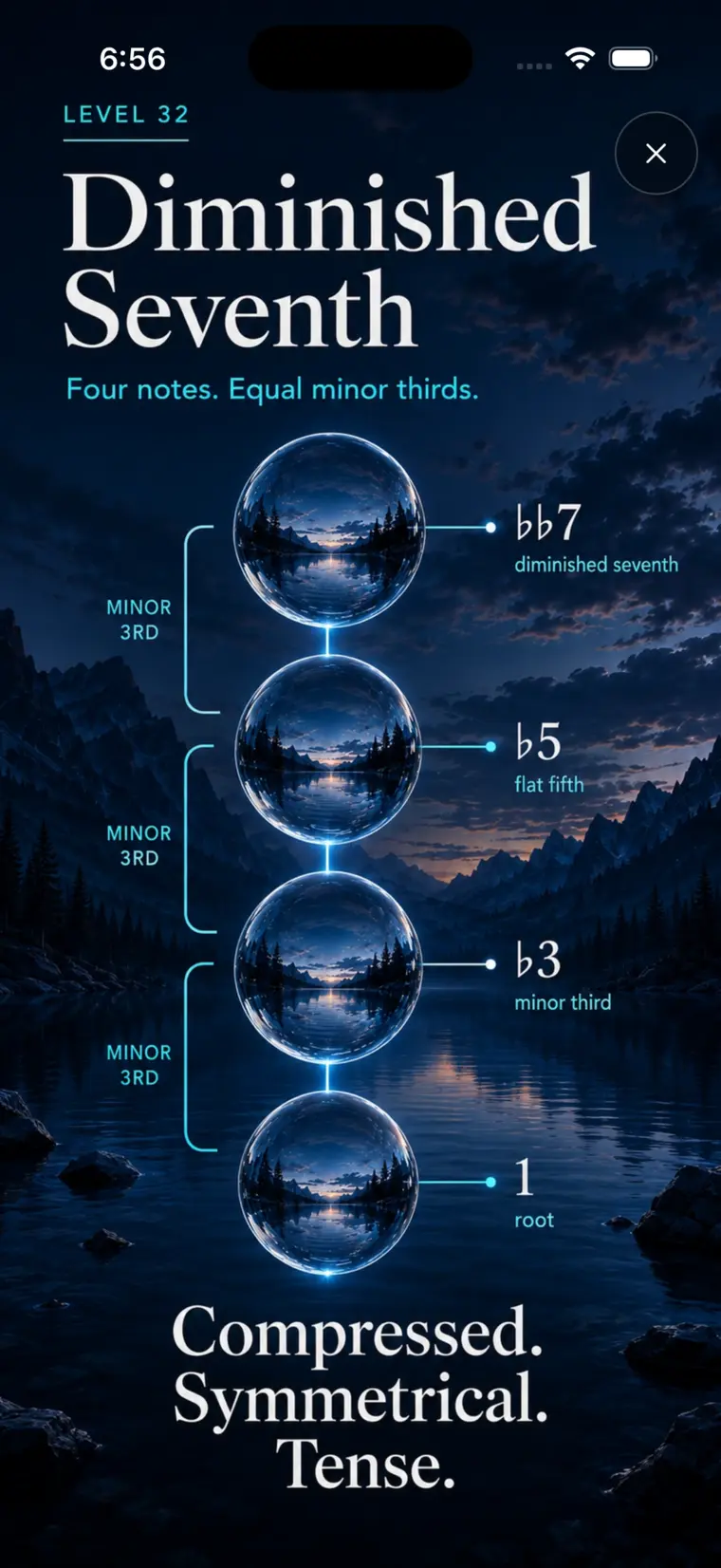
LISTENING ATLAS
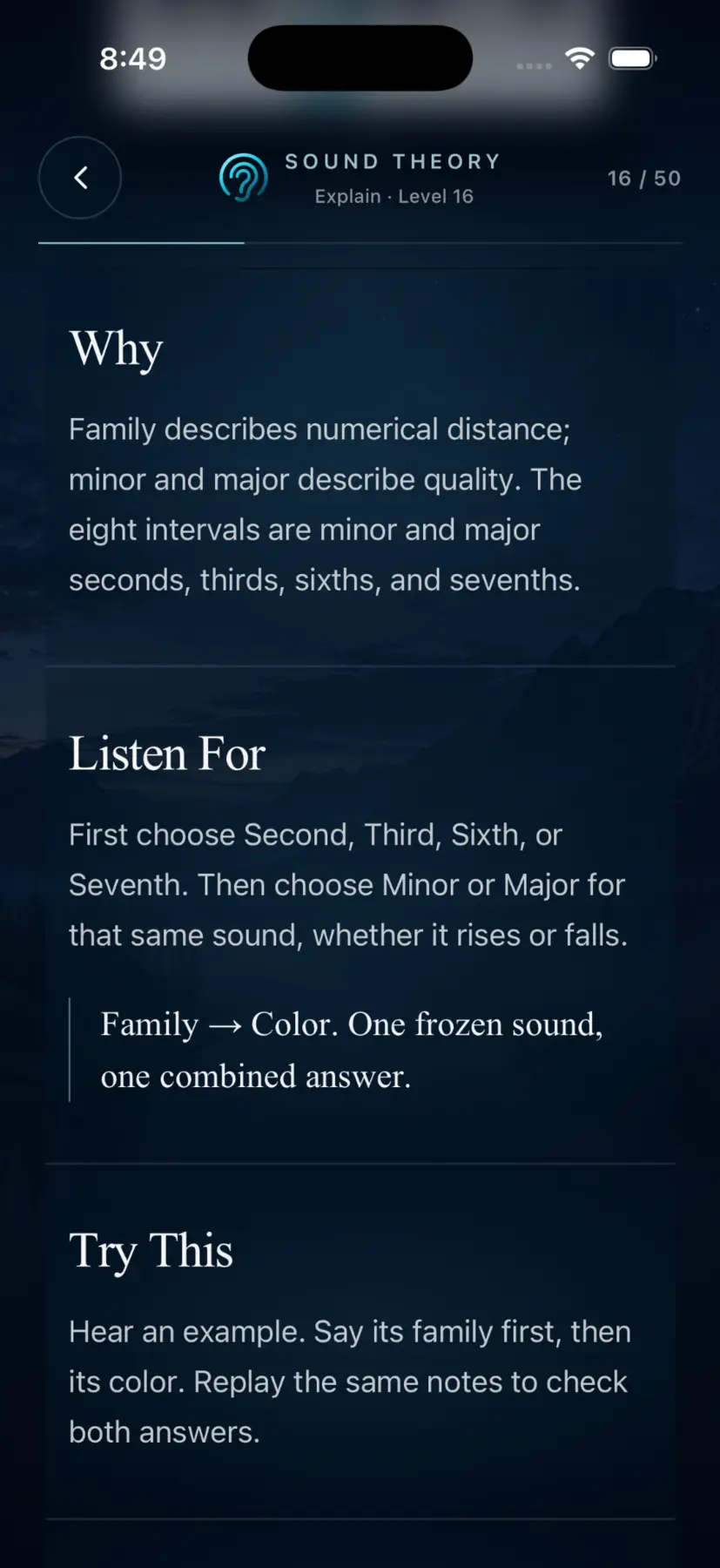
Full-screen teaching pages reveal the musical structures introduced through Listening Foundations. Each page belongs to the level that needs it.
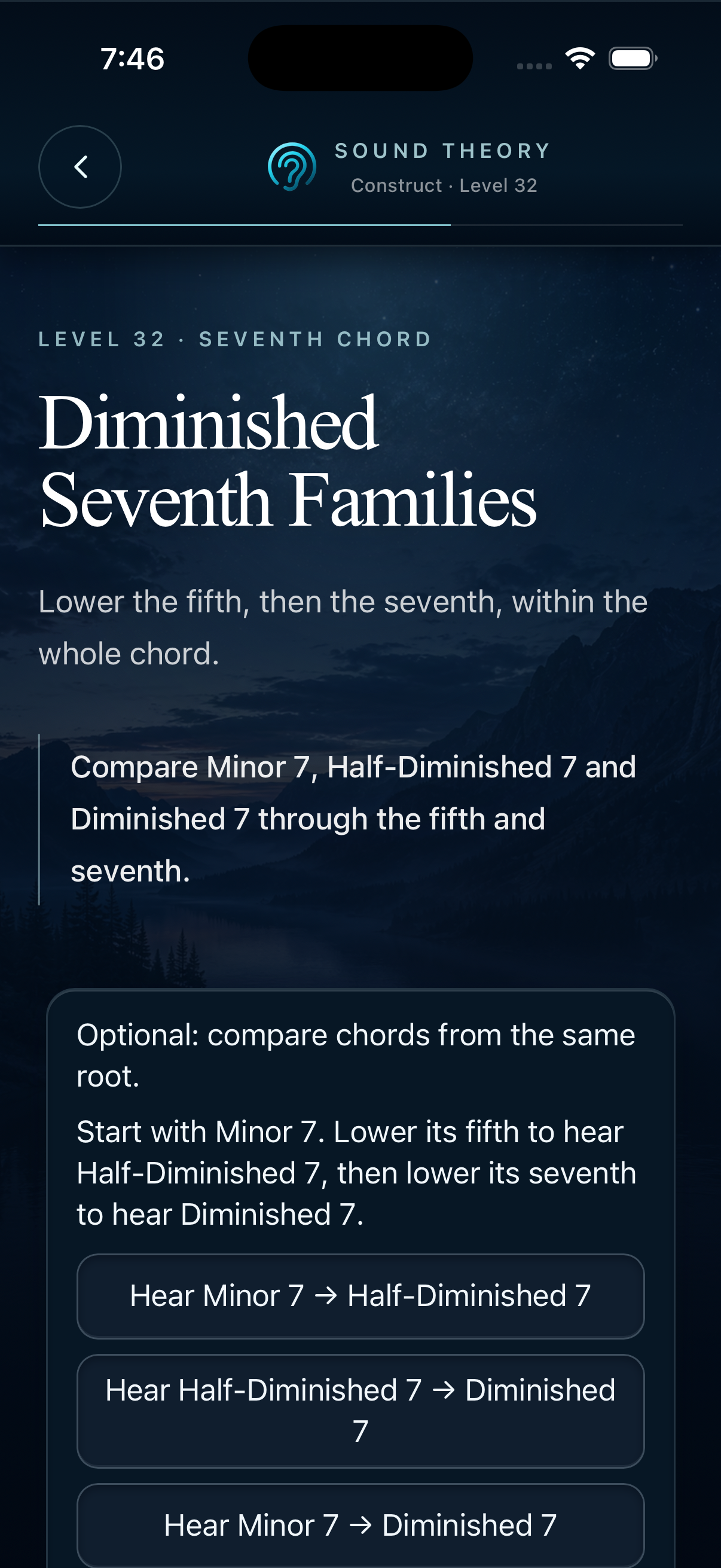
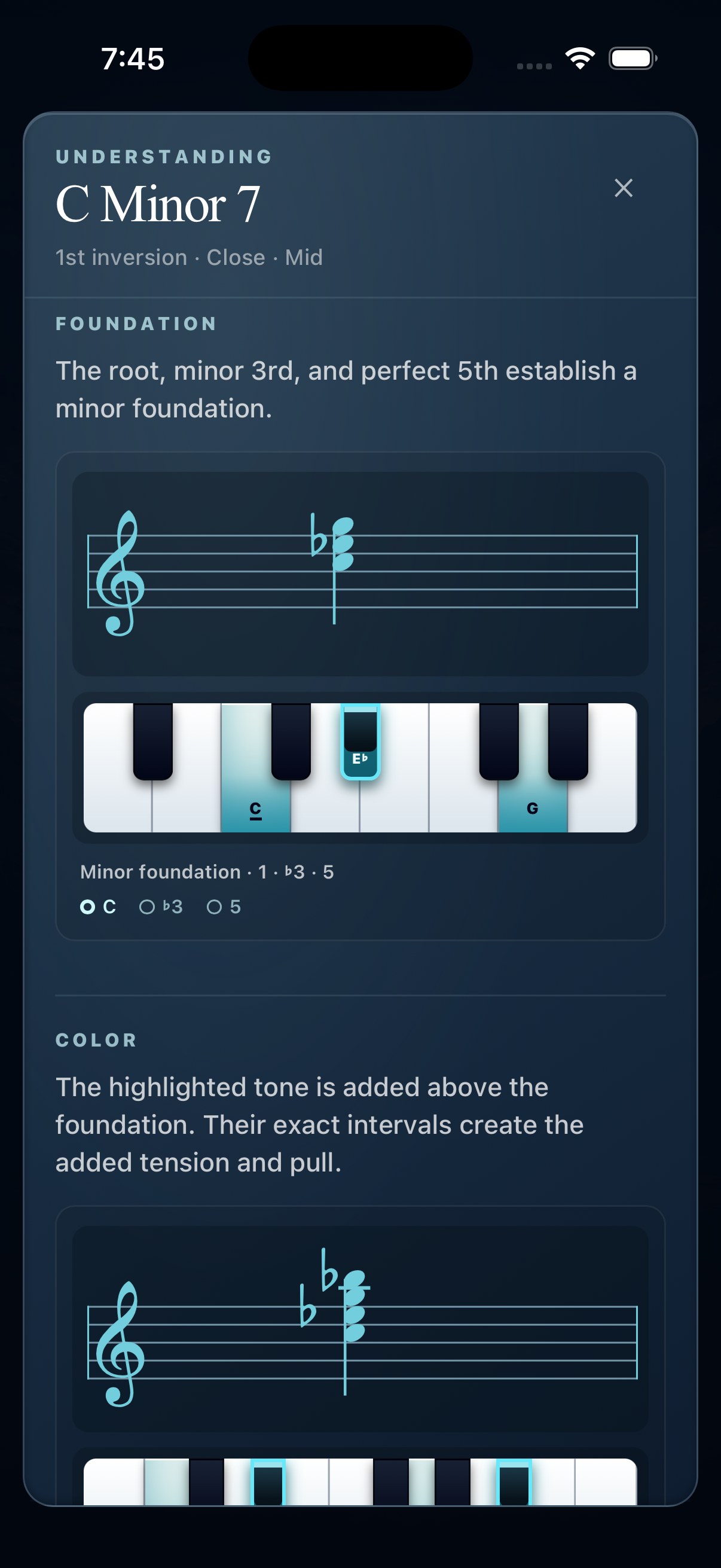
SOUND THEORY
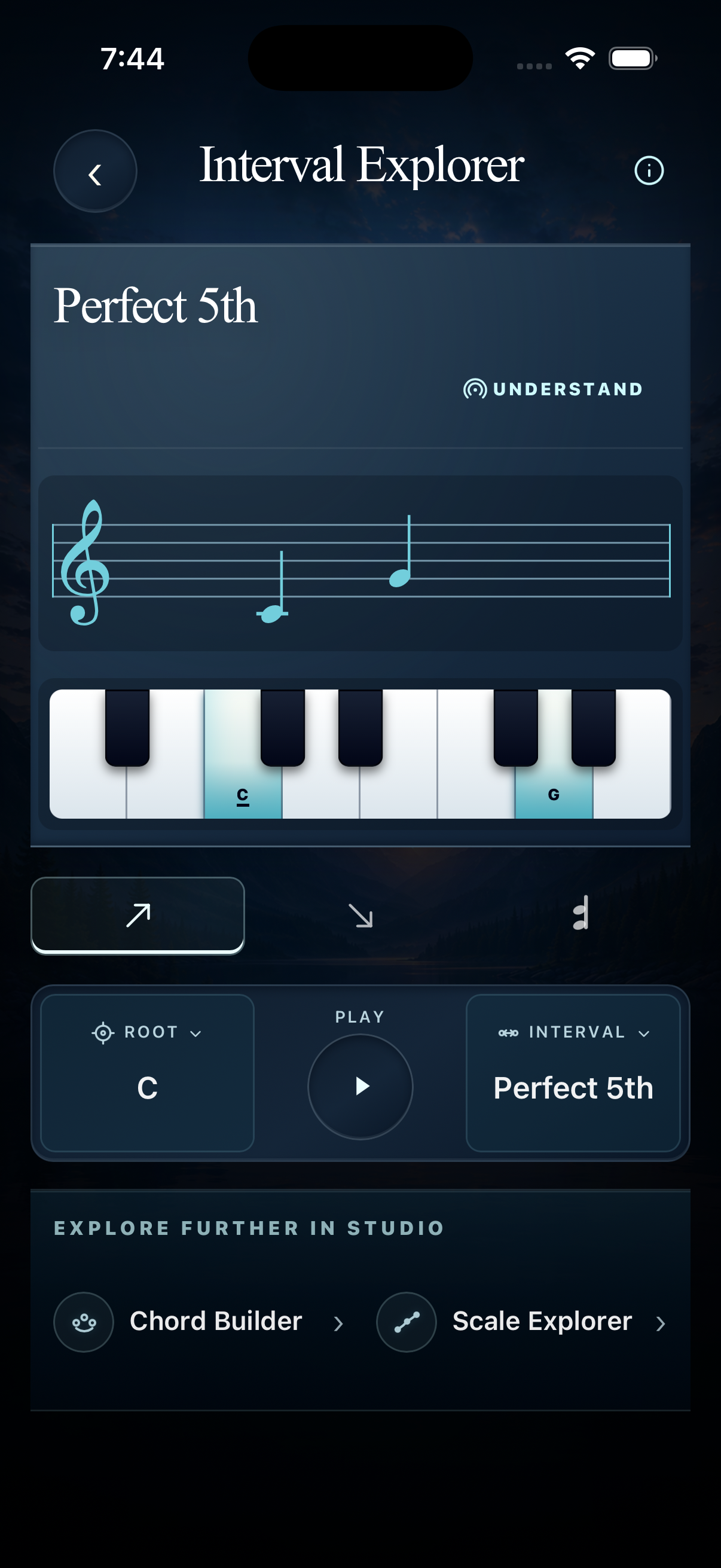
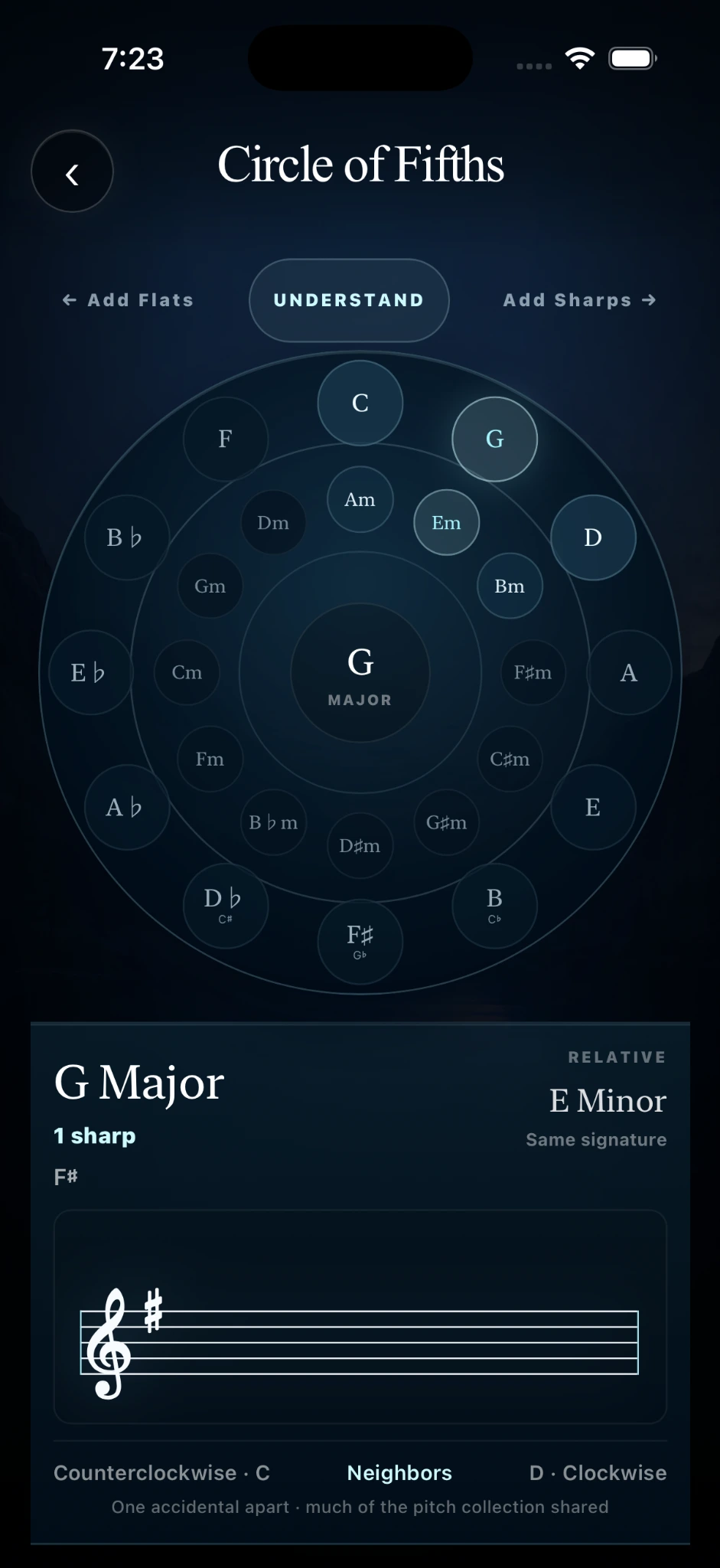
Play an example, identify what matters, then connect the same sound to staff notation and the keyboard. Explore intervals, scales, chords, and voicings whenever a question is worth following.
03 · YOUR WORKING SPACE
The tools used between lessons, rehearsals, practice sessions, and performances live together.
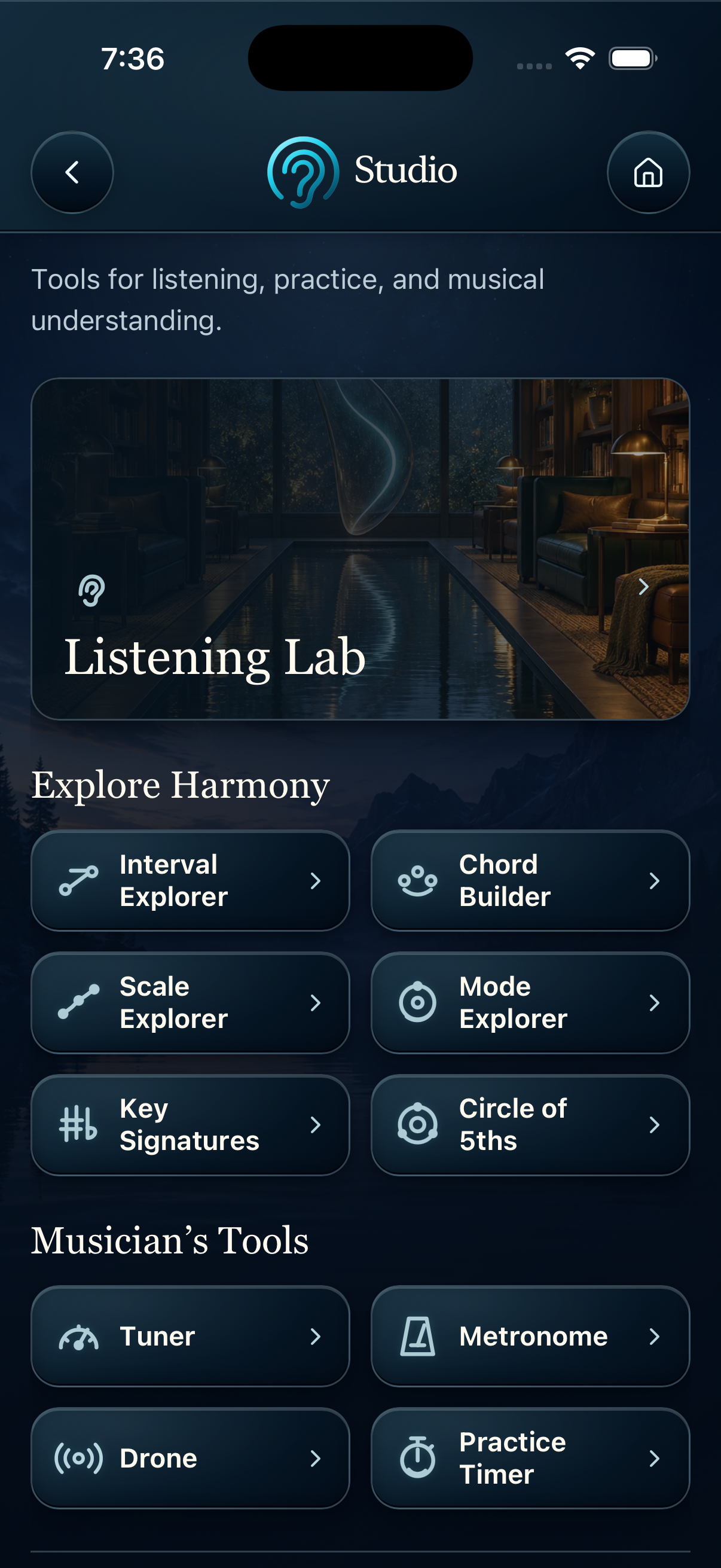
Study a relationship in Sound Theory. Practice it in Listening Lab. Tune an instrument, hold a tonal center, shape time, or choose the sound that supports the work.
Tempo, meter, subdivision, patterns, count-in, and practice structure.
Clear pitch feedback, reference tone, and visual movement around the center.
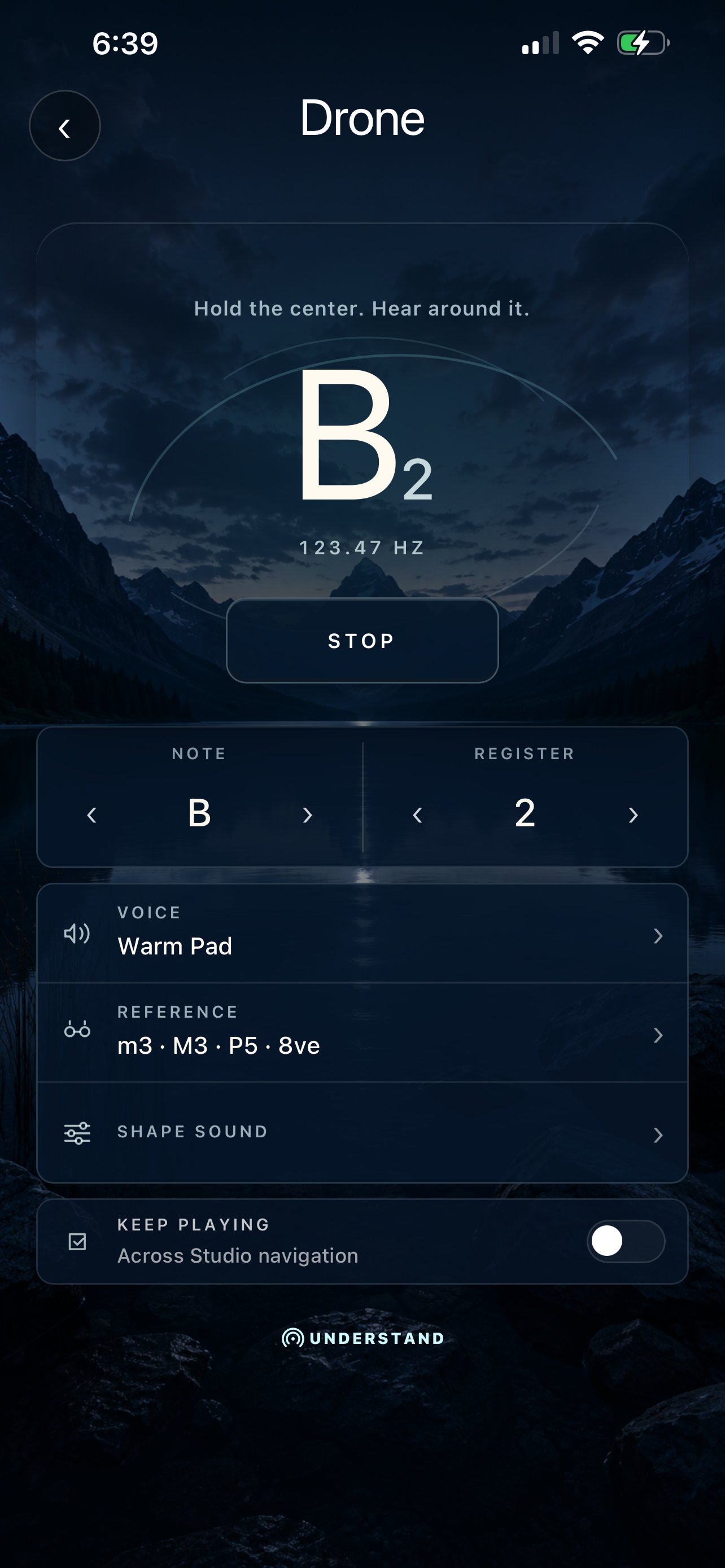
A sustained tonal center for intonation, intervals, long tones, and improvisation.
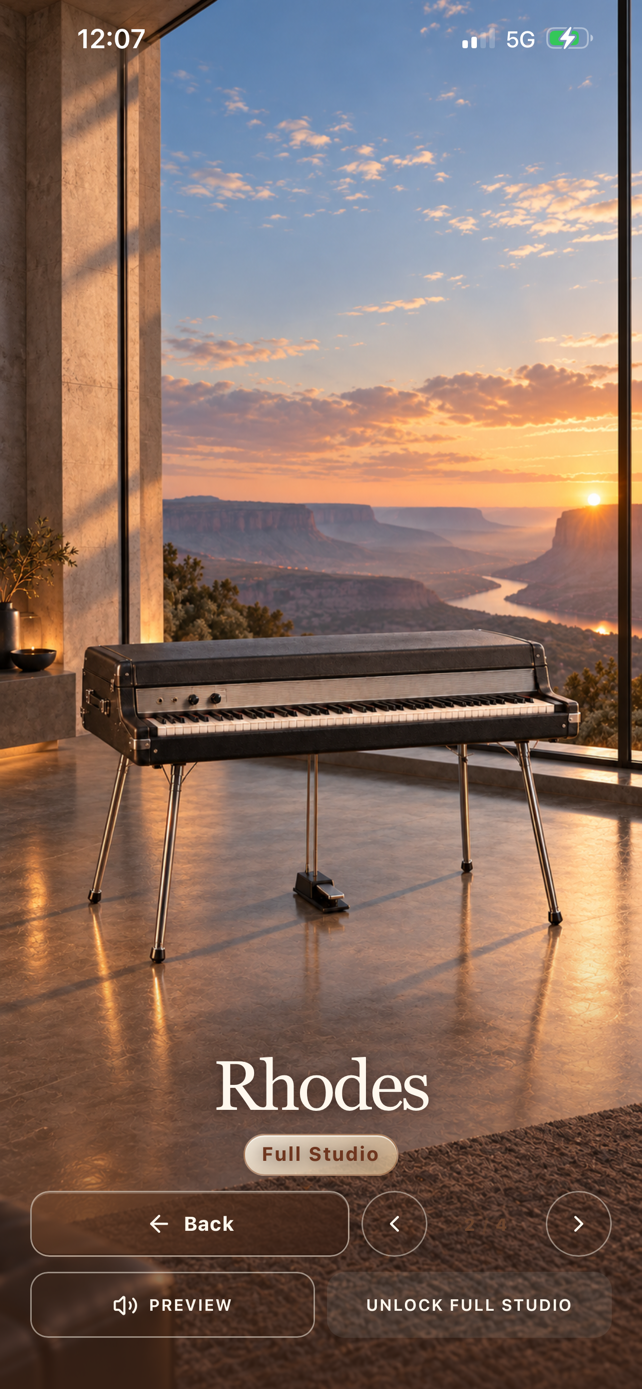
Instrument voices that give listening and exploration a different character.
MUSICIAN’S TOOLS
Tuner, Metronome, Drone, and Practice Timer are not side features. They are part of the same Studio where listening, theory, and practice meet.
INSTRUMENT VOICES
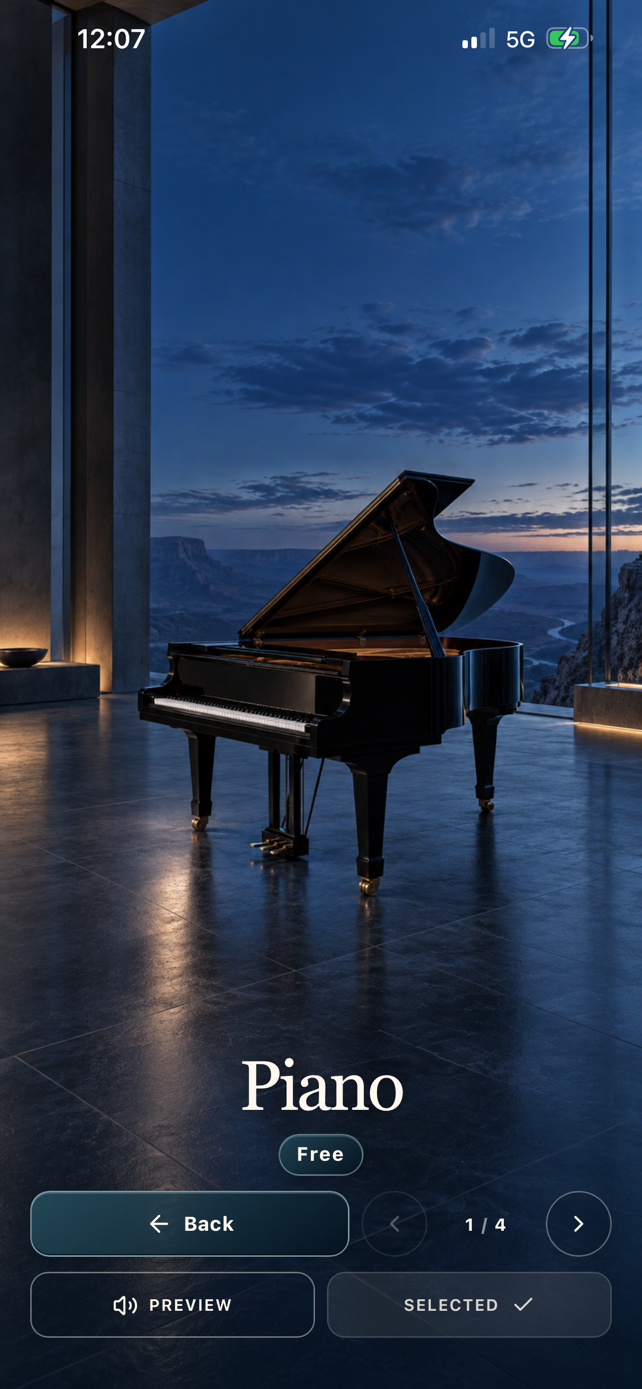
Piano and Rhodes voices give the same musical relationships a different surface. Choose the sound that helps you hear the work more clearly.
LISTENING LAB
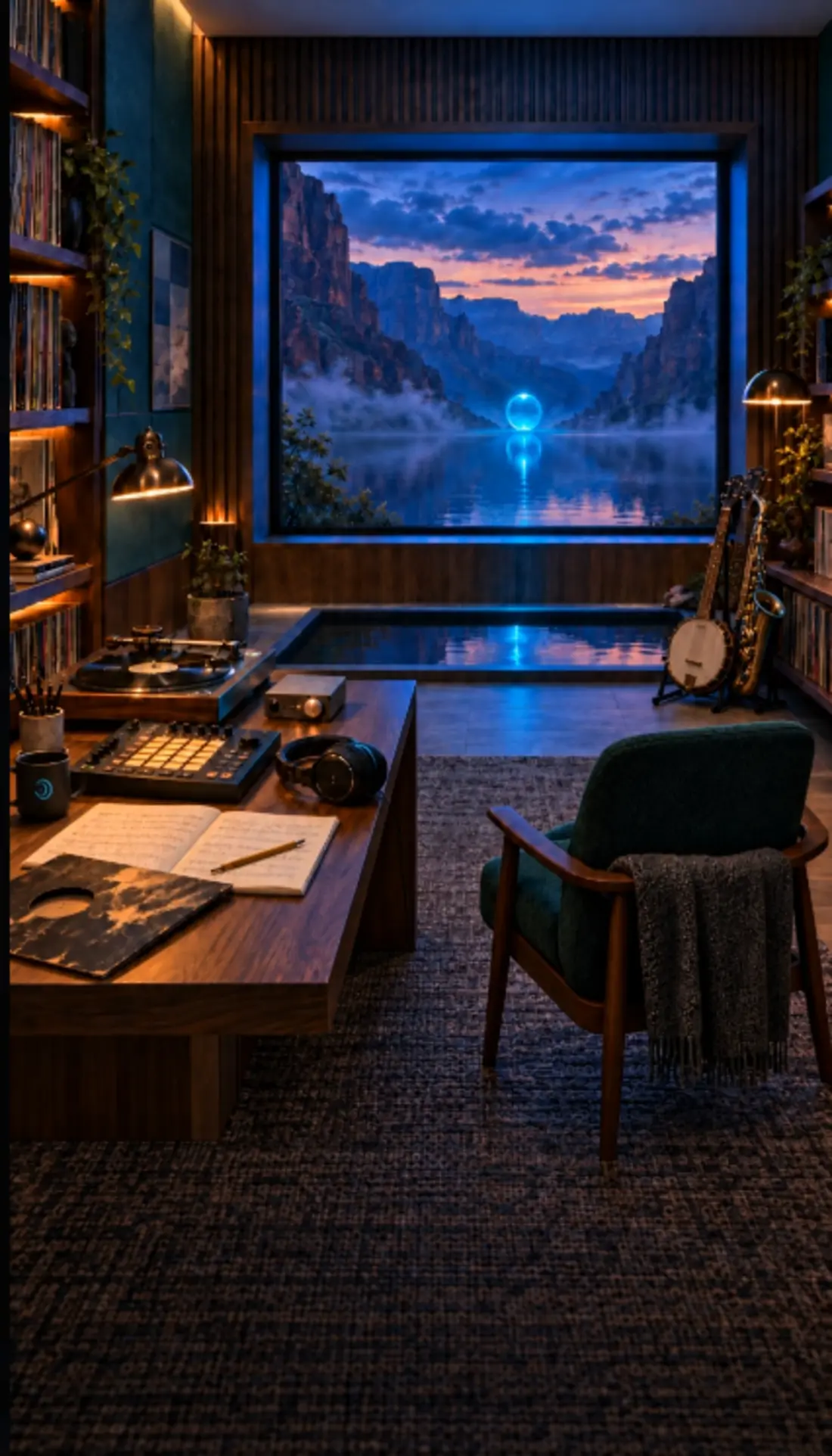
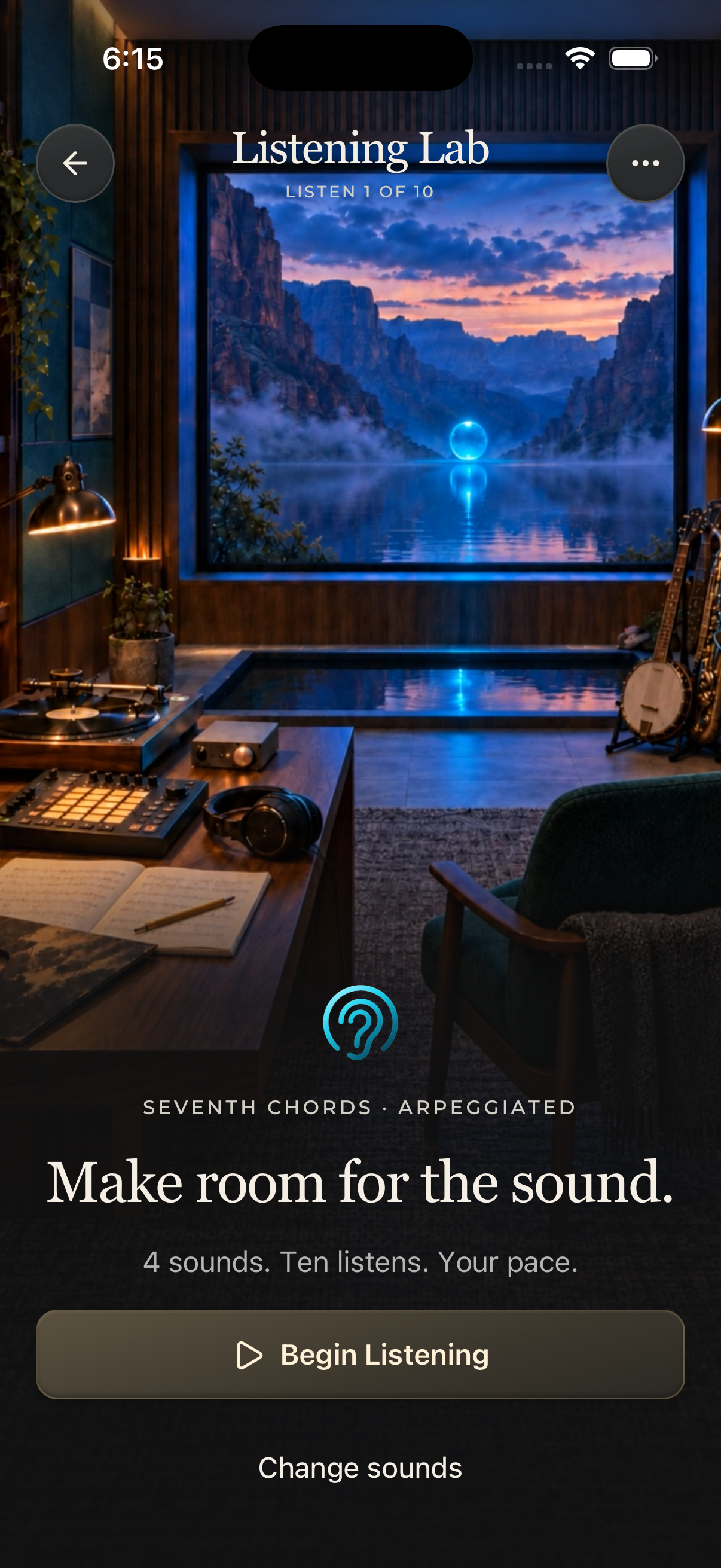
Return to your current level or build focused practice of your own. Journey progress stays separate, so experimentation remains safe.
FREE · DEFAULT

FULL STUDIO
ACTIVE PRACTICE
Enter from Studio, return to the level you are learning, or build focused practice from the sounds you have opened. The interface stays quiet so the musical question remains central.
04 · NOTICE WHAT YOUR EAR IS LEARNING
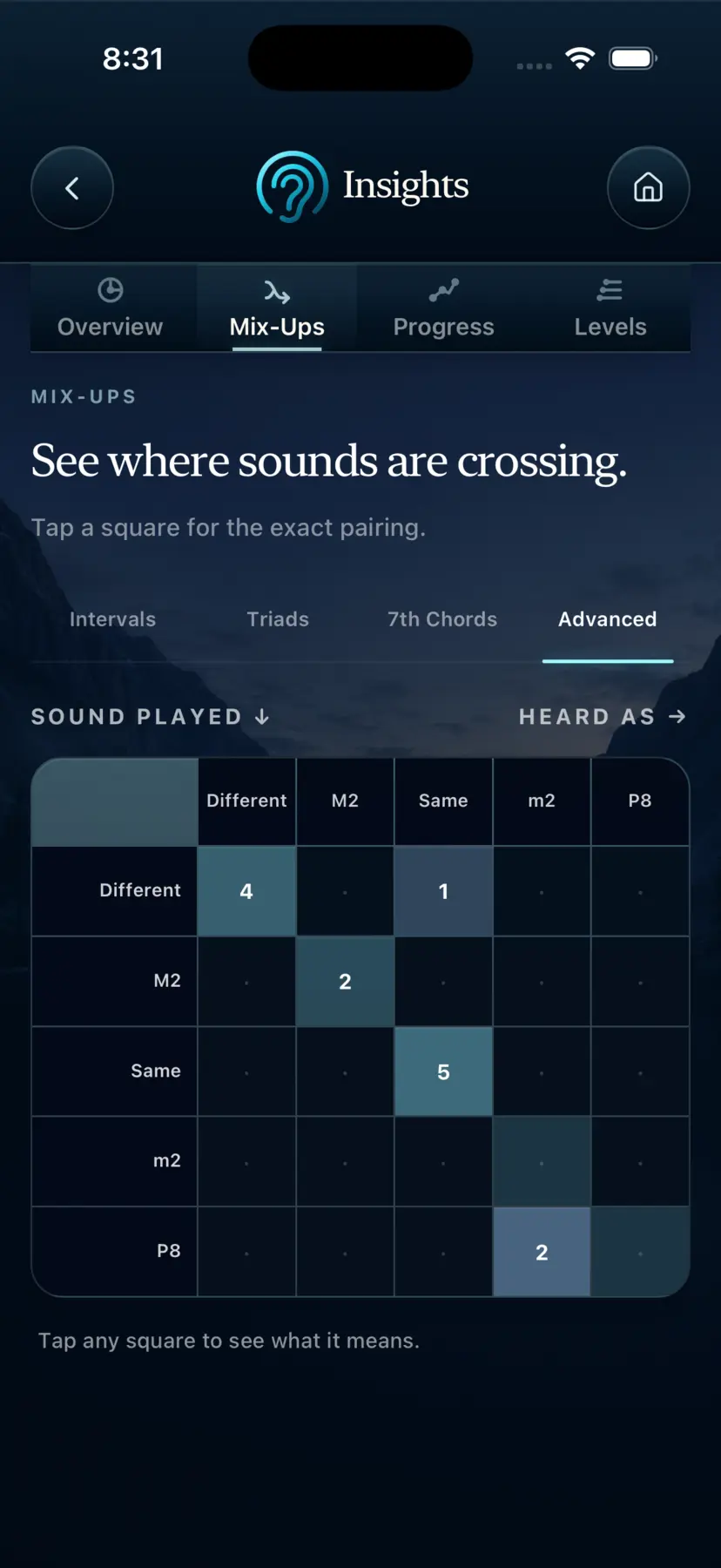
See musical growth by area instead of reducing everything to one score.
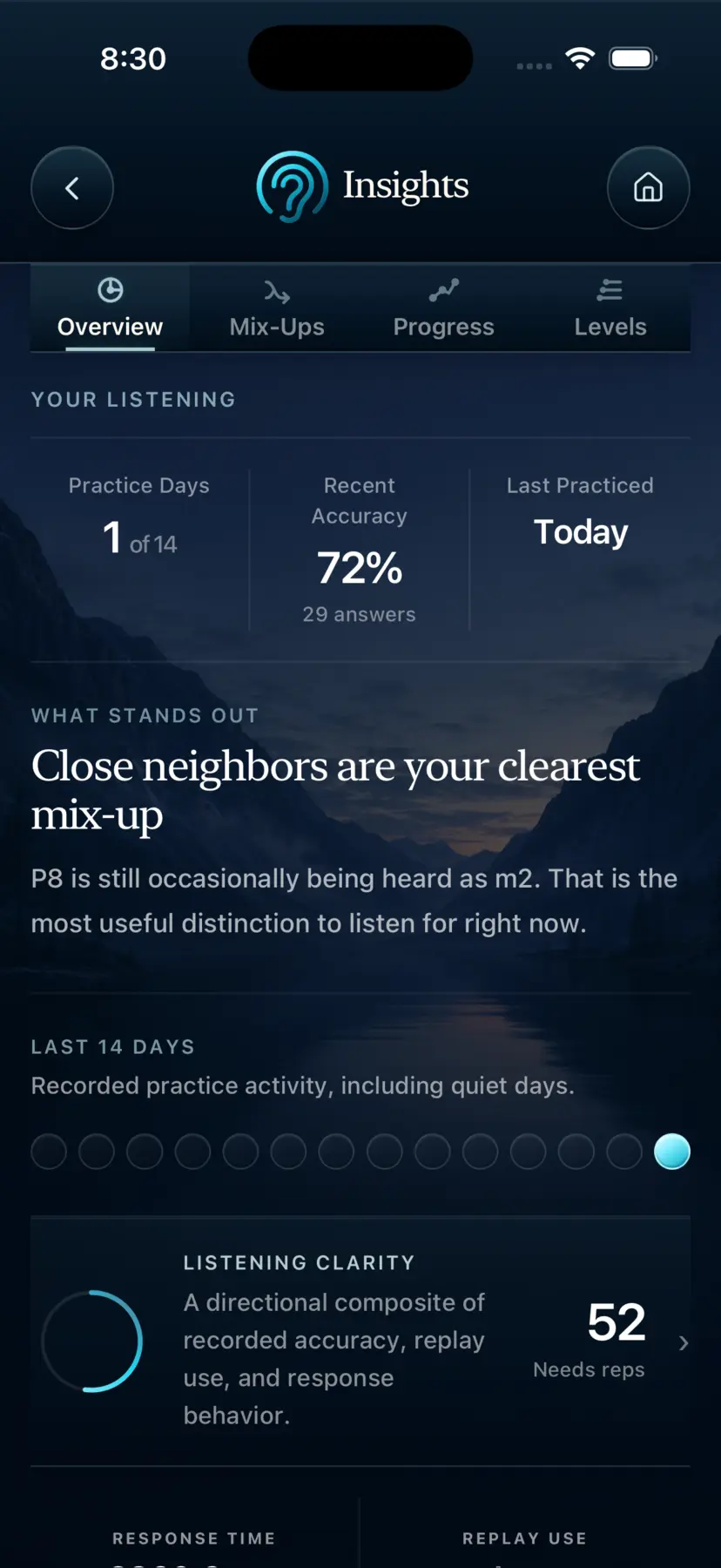
Intervals, chords, and harmonic areas remain distinct.
Accuracy, experience, recent work, and repeated mixups add context.
Return to the Journey or practice a developing relationship in Listening Lab.
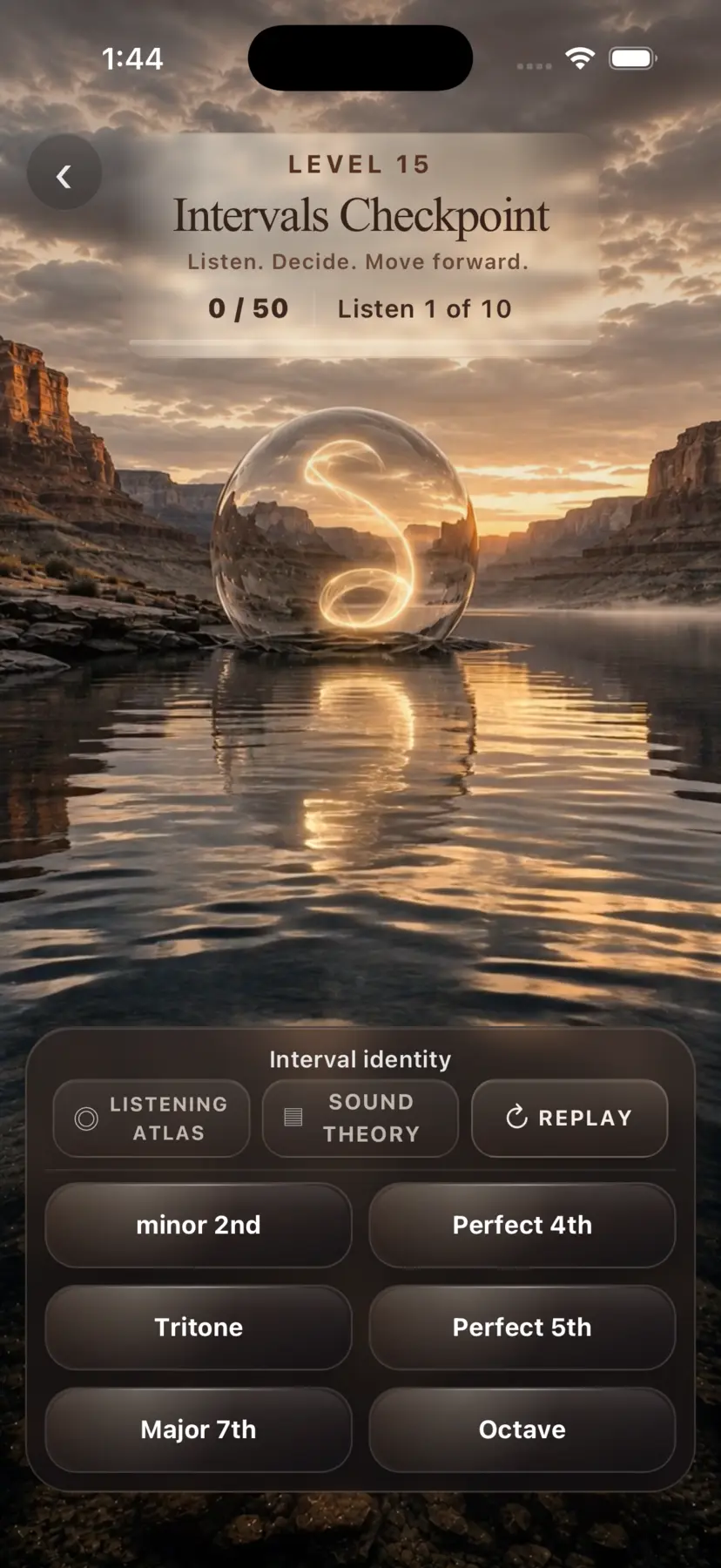
THE SAME STUDIO · A DIFFERENT LIGHT
Choose the atmosphere that supports the way you listen. Every lesson, staff, keyboard, tool, and insight remains clear in both.
CORE JOURNEY
Listening Foundations keeps its hierarchy and musical focus from deep ink to warm daylight.
SOUND THEORY · STAFF
Hear the relationship, then see it clearly on the staff in either visual mode.
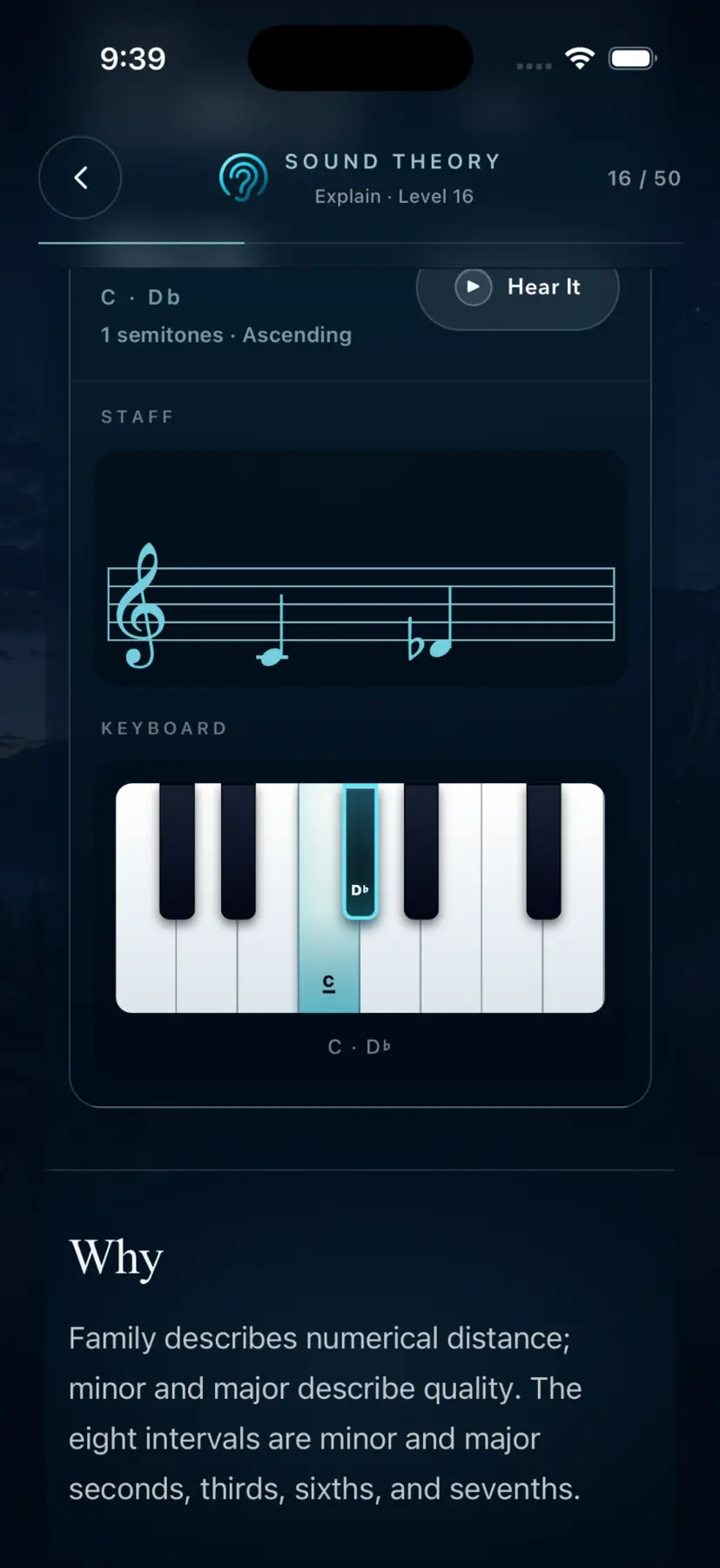
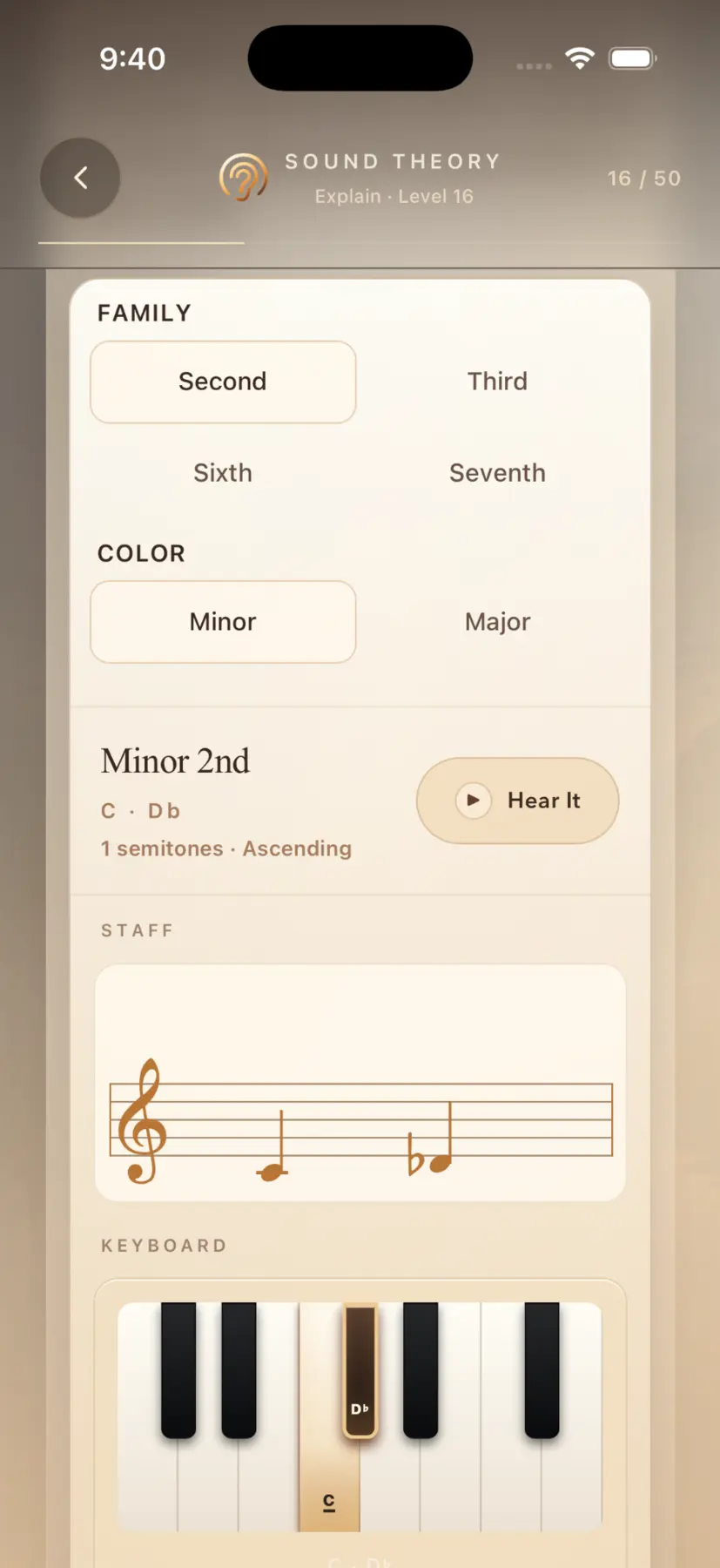
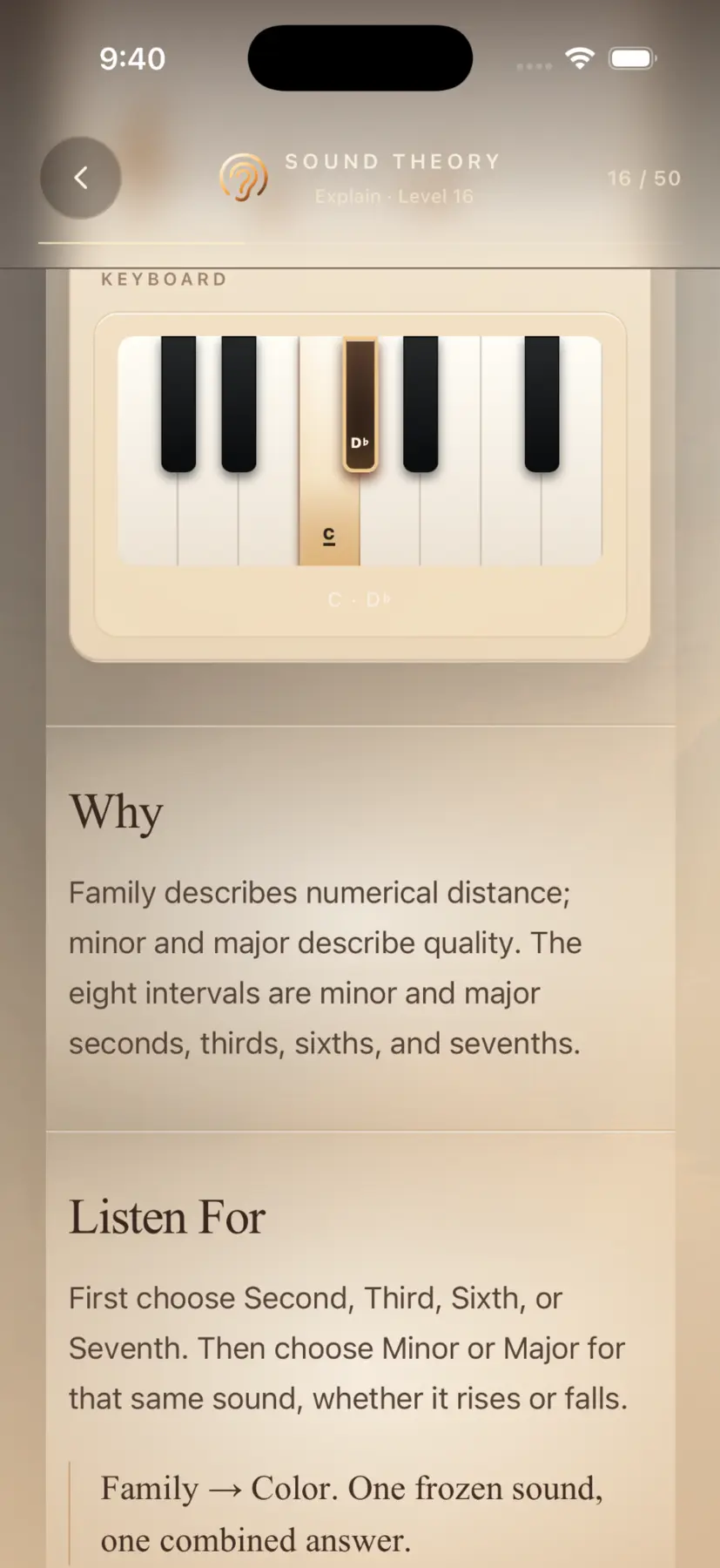
SOUND THEORY · KEYBOARD
Keyboard relationships remain immediate, legible, and connected to the notation above.
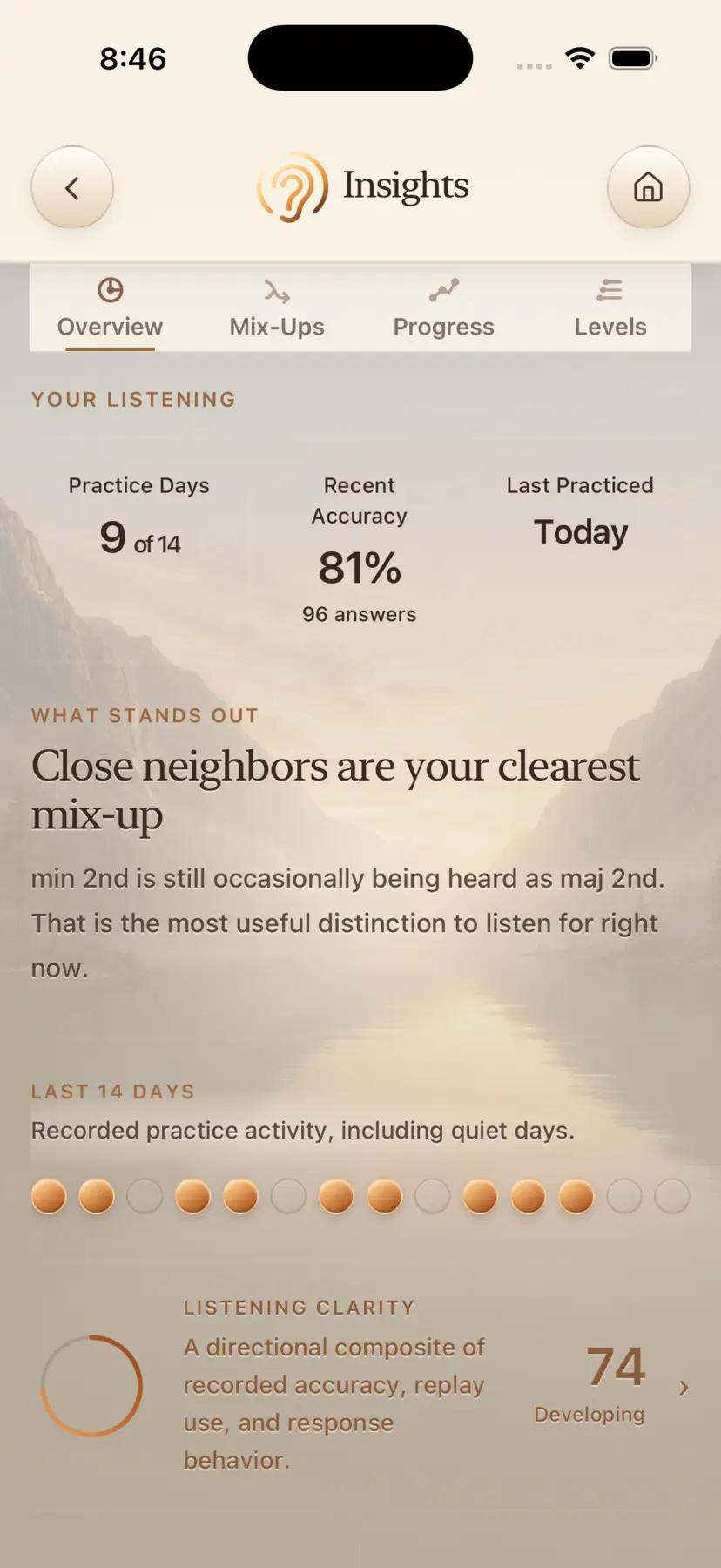
INSIGHTS
The Listening Matrix follows the same musical information through both environments.
THE WORLD CAN GROW
Listening Foundations establishes the shared language. Future Journeys develop other dimensions of musicianship.
AVAILABLE NOW
Listening Foundations: pitch, intervals, chords, harmony, extensions, and integrated listening.
COMING 2027
Pulse, subdivision, meter, syncopation, feel, groove, and rhythmic memory.
FUTURE
Function, progression, bass motion, cadence, voice leading, and direction.
Hear This on iPad
Room for sound, space for discovery. Explore Hear This in a layout built for landscape.
Hear This brings listening, understanding, exploration, and practice into one connected Studio. On iPad, the landscape layout gives musical ideas room to unfold, with controls and context close to the sound.
Listening Foundations
Fifty levels connect focused listening with musical understanding.
The 50-level core Journey begins with simple differences in pitch and motion, then develops interval, chord, and harmonic recognition. Follow a clear sequence, return to familiar relationships, and give each musical idea the attention it needs.
Listening Atlas
Art and clear musical ideas bring each listening relationship into focus.
Listening Atlas connects the sound of each level with its musical structure. Artwork and focused teaching copy make the relationship visible, giving you something clear to listen for when you return to practice.
Sound Theory
Explore the relationship between what you hear, the staff, and the keyboard.
Sound Theory brings musical language into the listening experience. Follow relationships on the staff and keyboard, and connect the explanation with the sound rather than treating them as separate subjects.
Chord Builder
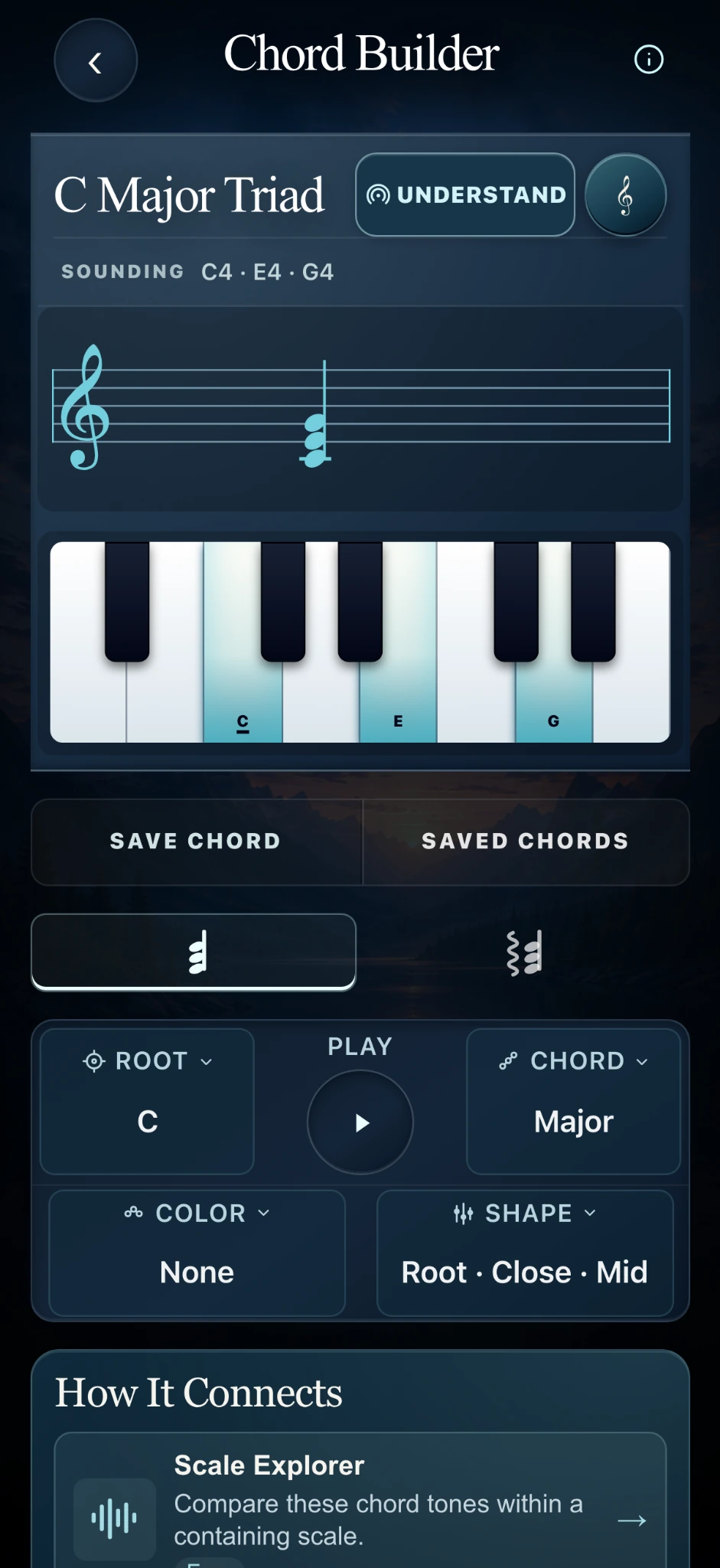
Build, hear, and explore chords with notation, keyboard, and musical context together.
Choose a root and chord quality, then explore its sound, notation, and keyboard shape. Compare available voicings, listen together or arpeggiated, and open Understand for musical context beside the controls.
Scale Explorer
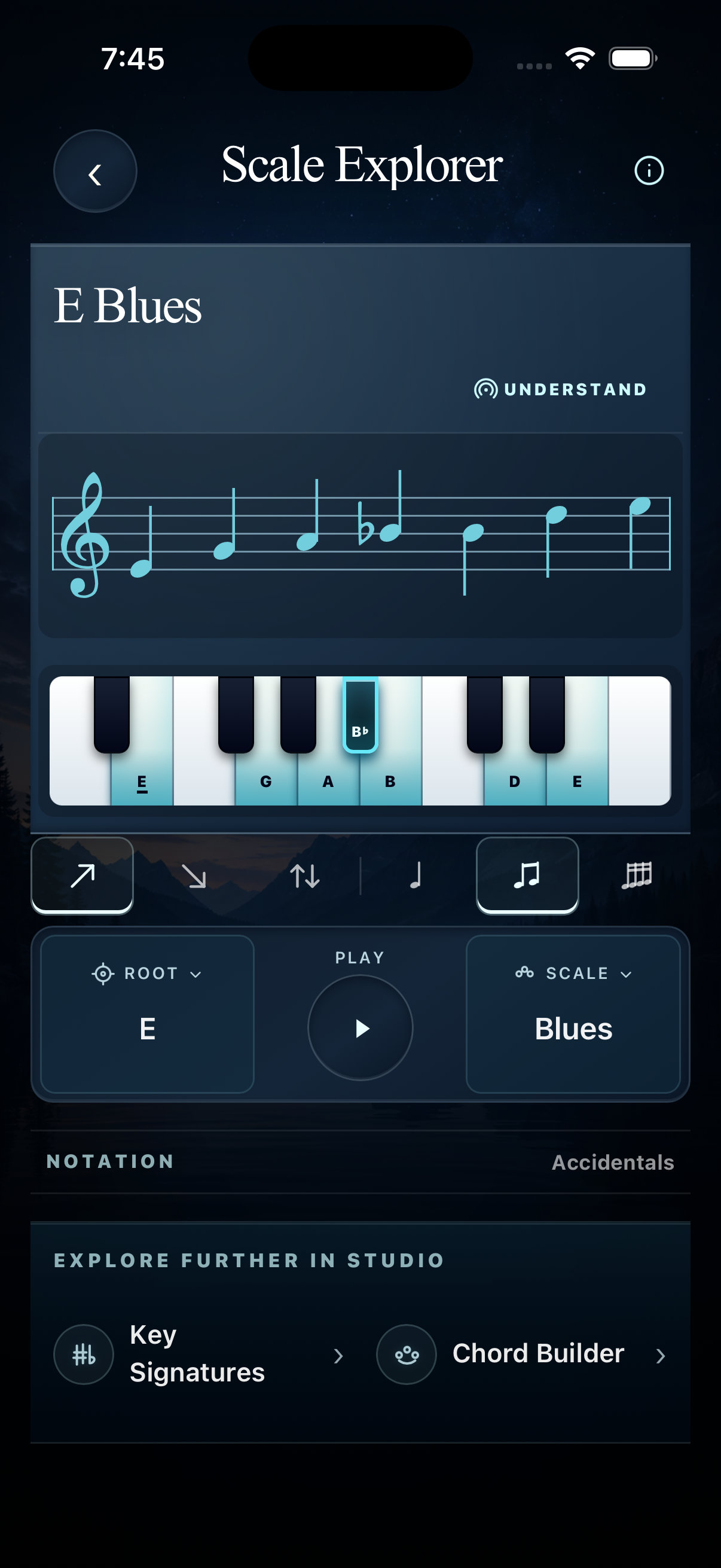
Explore scales and modes with space to see their structure.
Explore scales and modes through playback, staff notation, and keyboard relationships. Change the pace of playback and listen closely to the character of each collection, with its musical context in view.
Listening Lab
Choose your listening practice and return to the relationships you want to explore.
Listening Lab gives you room to choose the relationships you want to practice. Build a focused set, listen again, and use Study to spend time with a sound before returning to the next prompt.
Insights
Reflect on recorded listening activity and the relationships that deserve another listen.
Insights brings recorded listening activity into view, including accuracy and musical relationships that may need another listen. Use it to reflect on practice and choose where to give your attention next.
Metronome
Keep a steady pulse beside your instrument.
Keep the Metronome beside your instrument while you work. Set a tempo, shape the pattern, and use the steady pulse as part of the same musical space where you listen and explore.
Drone
Keep a tonal center close while you practice.
Hold a pitch while you practice intonation, phrasing, or harmonic relationships. A sustained tonal center gives each note a point of reference and invites closer listening to tension and resolution.
Instrument voices
Listen through the sound that helps you hear more clearly.
Piano and Rhodes voices bring different colors to your listening. Choose an instrument voice that helps you hear the relationship clearly, then carry that sound into exploration and practice.
IPAD · PORTRAIT AND LANDSCAPE
Explore in landscape or settle into portrait. The musical experience adapts to the space.
Dusk and Sunrise
Move from deep ink to warm morning light with the same musical focus.
Dusk offers deep ink and a quiet night atmosphere. Sunrise brings warm morning light to the same musical world. Both keep sound, clear relationships, and calm practice at the center.
05 · HEAR THIS ON WATCH
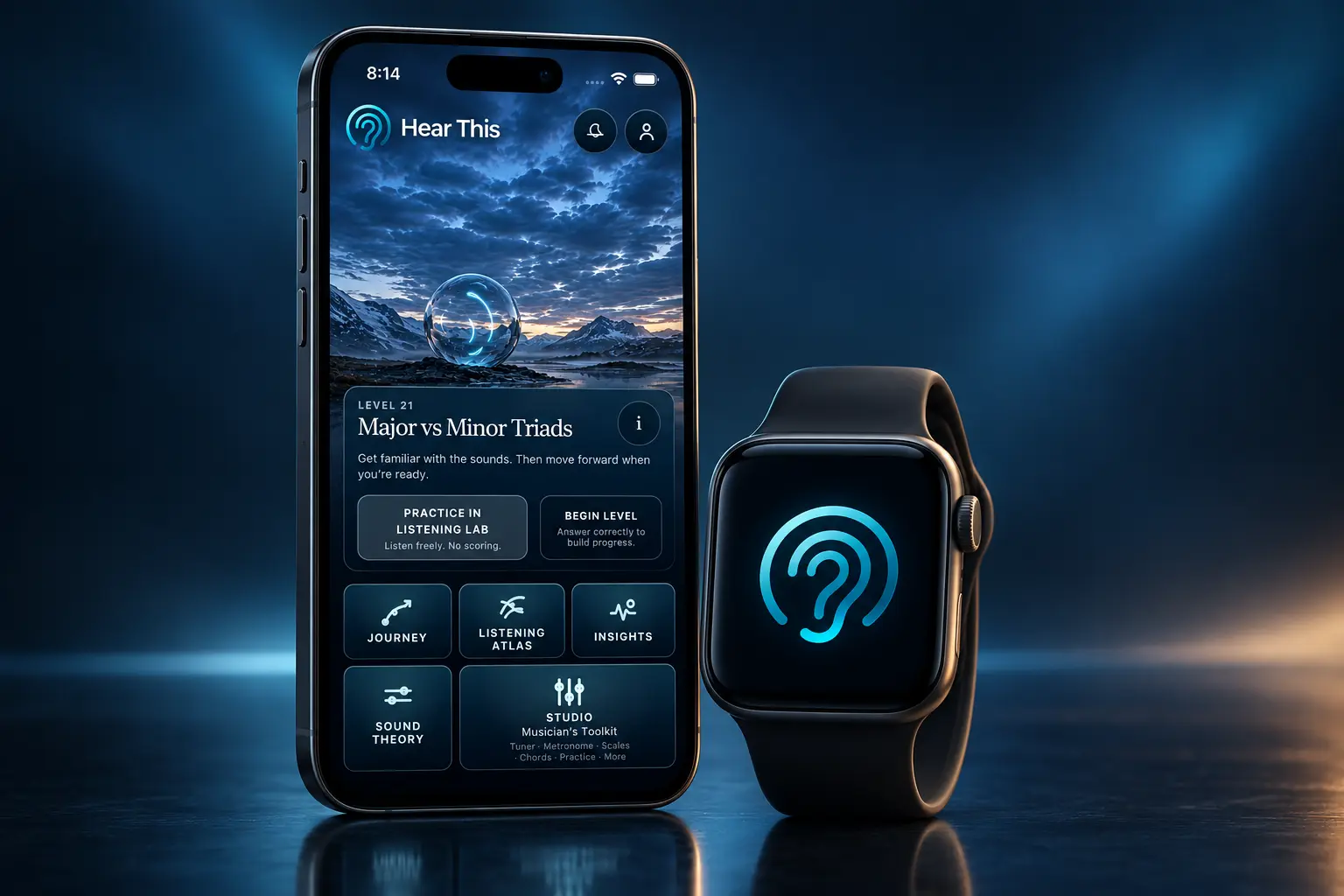
Choose eligible Listening Lab practice on iPhone. Hear the prompt through connected earbuds. Answer from your Watch while your phone stays in your pocket.
On the train. On a walk. Between rehearsals. The Watch companion keeps the experience focused on listening.

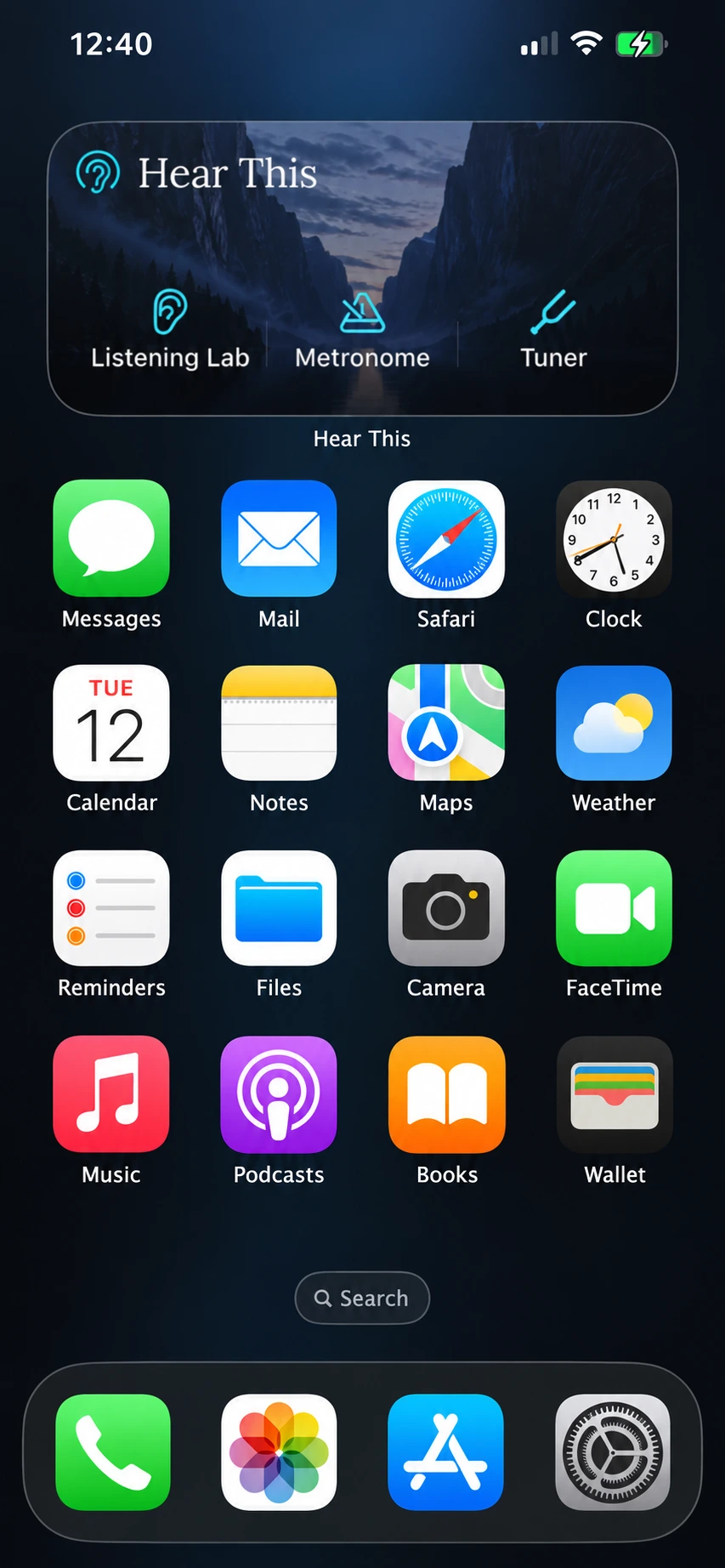
A SMALLER WAY IN
The Hear This widget puts a next step within reach: Listening Lab, Metronome, or Tuner without opening the full studio first.
It is a quiet reminder to return to the work when a few minutes become available.
06 · MAKE IT YOURS
No account is required. Create one only if you want to protect and synchronize supported progress.
FREE
FULL STUDIO
Available purchase options and prices are shown in the app.